March 2026
-

Azure Updates – Number 133 – March 21, 2026
A summary update on Azure news that includes updates released from Microsoft Azure related to Azure, Architecture, Compute, Security Copilot and Sentinel topics. Save time digging around to find recent releases and changes.
-
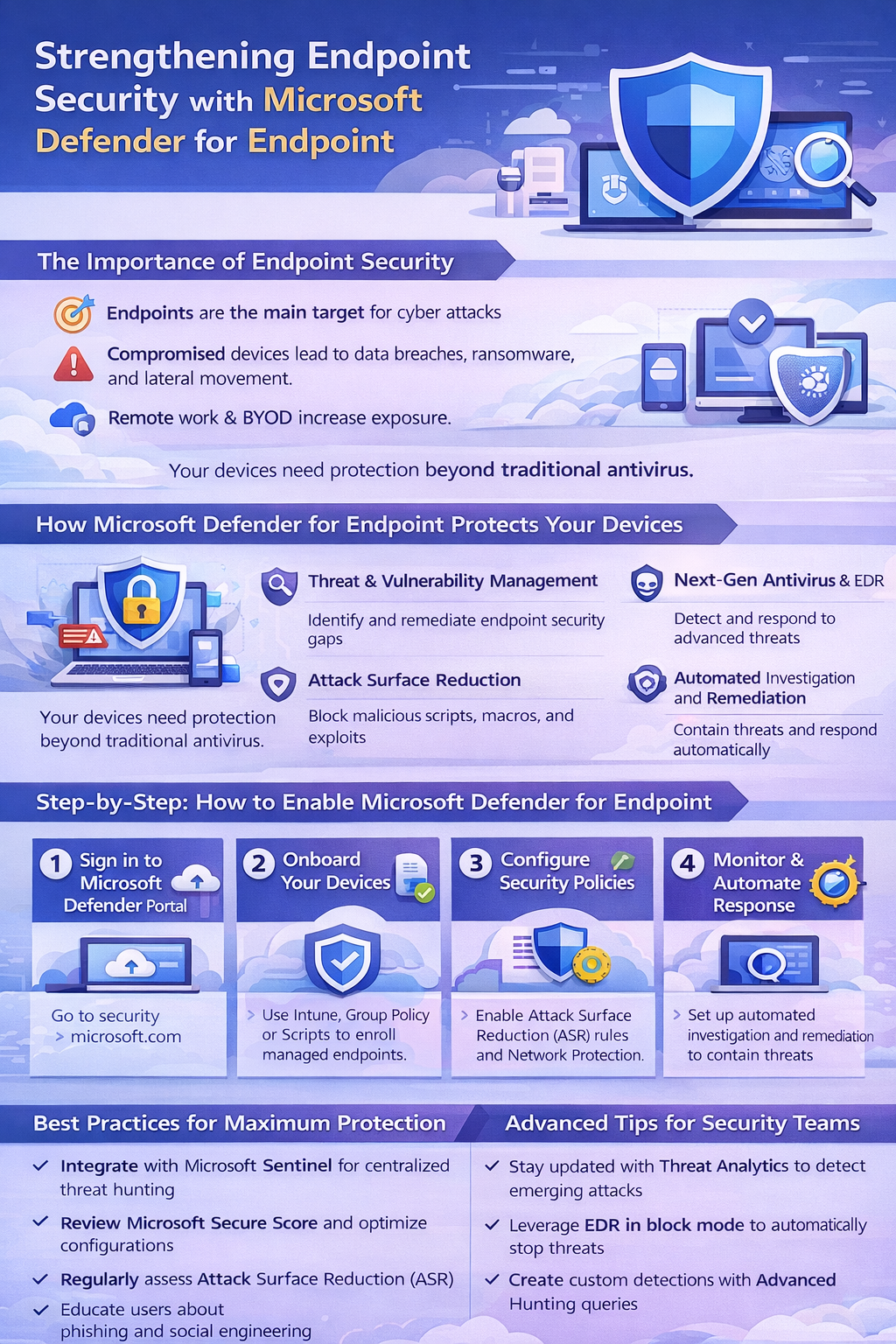
Strengthening Endpoint Security with Microsoft Defender for Endpoint
You will quickly discover that endpoints are the frontline of modern cyber defense — and the first targets for attackers. Laptops, desktops, servers, and mobile devices sit at the intersection of users, data, and the cloud, making them prime entry points for ransomware, credential theft, and lateral movement. This article explains how Microsoft Defender for…
-
Azure Updates – Number 132 – March 7, 2026
A summary update on Azure news that includes updates released from Microsoft Azure related to Azure, Architecture, Compute, Security Copilot and Sentinel topics. Save time digging around to find recent releases and changes.
-
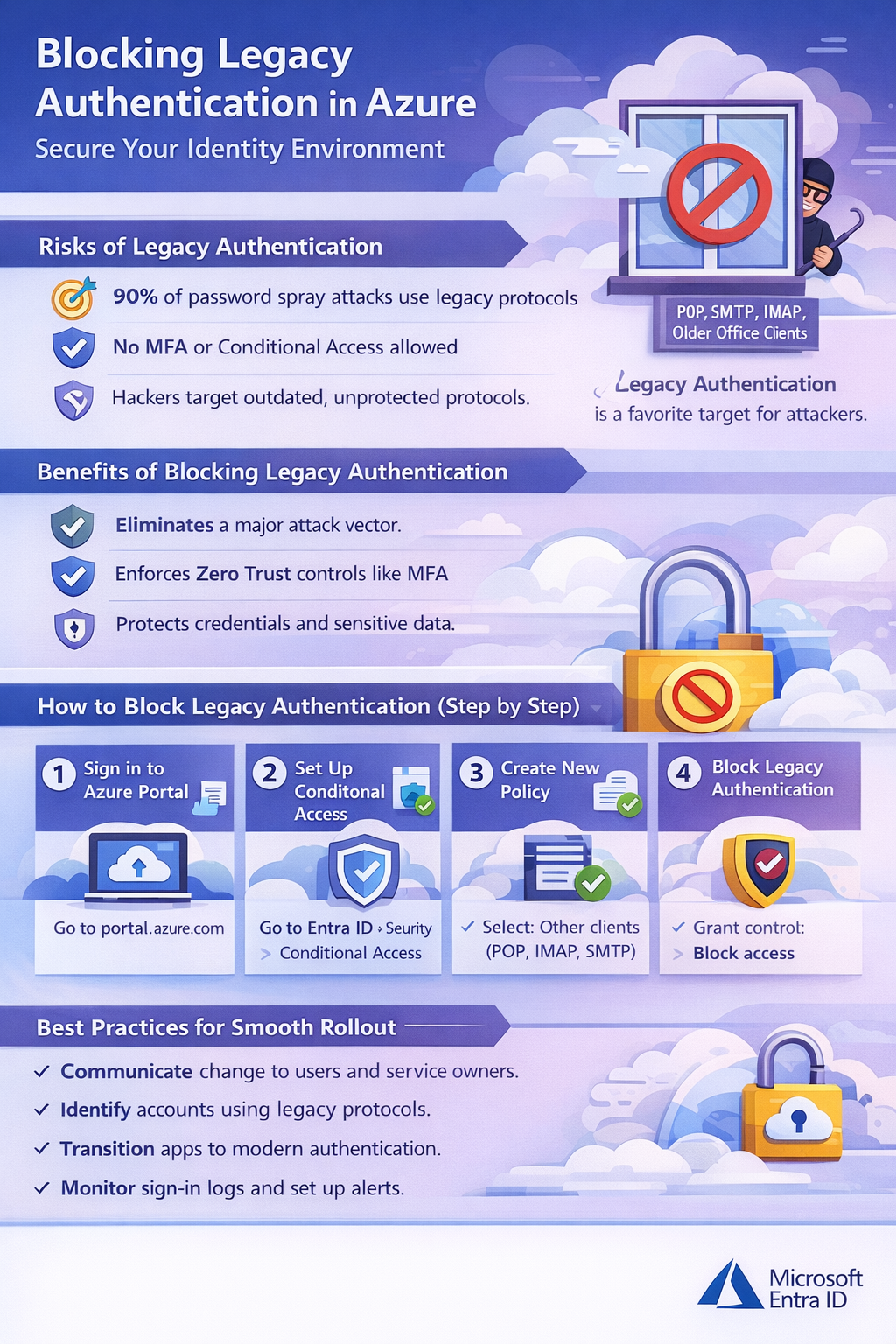
The Hidden Risk of Legacy Authentication
You will often hear about identity breaches, password sprays, and phishing attacks — and yet, the most overlooked attack vector remains legacy authentication. Protocols like POP, IMAP, SMTP, and older Office clients were designed decades ago, long before modern identity threats existed. They cannot enforce Multi-Factor Authentication (MFA) or Conditional Access, making them a persistent…