Securing Secrets with Azure Key Vault

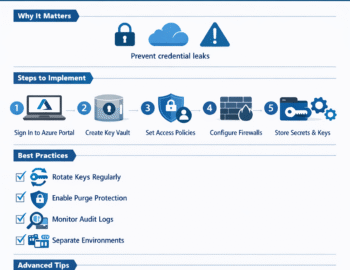
You will quickly realize that secrets stored in code, configuration files, or shared documents are one of the most common causes of cloud security incidents. Azure Key Vault (AKV) provides a secure, centralized environment for managing secrets, keys, and certificates. By enforcing strong access controls, network isolation, and auditing, Key Vault reduces the blast radius of potential exposures and ensures compliance with security standards.

This article explains why protecting secrets is critical, how to deploy Key Vault securely, best practices for secret lifecycle management, and advanced strategies for high-security environments. By the end, you will understand how to integrate Key Vault across applications, pipelines, and Azure services while maintaining strong governance, auditability, and Zero Trust principles.

Posted on 6:59 am
0
AzureTracks.com - Azure news, blog, help, security and infrastructure updates about Azure.

Azure Updates – Number 135

A summary update on Azure news that includes updates released from Microsoft Azure related to Azure, Architecture, Compute, Security Copilot and Sentinel topics. Save time digging around to find recent releases and changes.

Posted on 7:29 am

Enforcing Compliance with Azure Policy

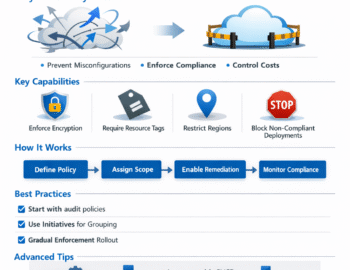
You will quickly realize that cloud environments can scale faster than governance can keep up—leading to misconfigurations, security gaps, and cost inefficiencies. Azure Policy acts as your automated compliance enforcer, ensuring that all deployed resources adhere to organizational standards.

This article explains how Azure Policy helps maintain control without slowing innovation. You will learn how to enforce encryption, require tags for cost and ownership tracking, restrict deployments to approved regions or SKUs, and prevent non-compliant resources before they go live. By leveraging built-in policies, custom definitions, initiatives, and integration with management groups or CI/CD pipelines, you will gain a scalable, proactive approach to cloud governance.

Posted on 6:46 am

Reducing Risk with Attack Surface Reduction Rules

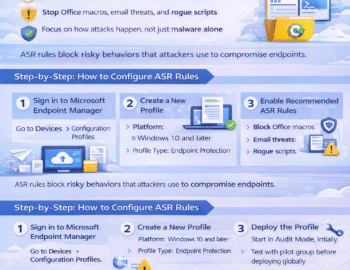
Many modern attacks don’t rely on exotic malware—they abuse normal application behavior. Office macros spawning PowerShell, scripts launching from temporary folders, or executables delivered through email are all techniques attackers use because they blend in with legitimate activity.

Attack Surface Reduction (ASR) rules are designed to stop these behaviors before they turn into a breach. Think of ASR as a security guard who doesn’t just check IDs at the door, but actively watches for suspicious behavior once someone is inside the building—and steps in immediately when something doesn’t look right.

Posted on 5:41 am