Walkthroughs
Step-by-step Azure and Microsoft security implementation guides.
-

Reducing Risk with Attack Surface Reduction Rules
Many modern attacks don’t rely on exotic malware—they abuse normal application behavior. Office macros spawning PowerShell, scripts launching from temporary folders, or executables delivered through email are all techniques attackers use because they blend in with legitimate activity. Attack Surface Reduction (ASR) rules are designed to stop these behaviors before they turn into a breach.…
-
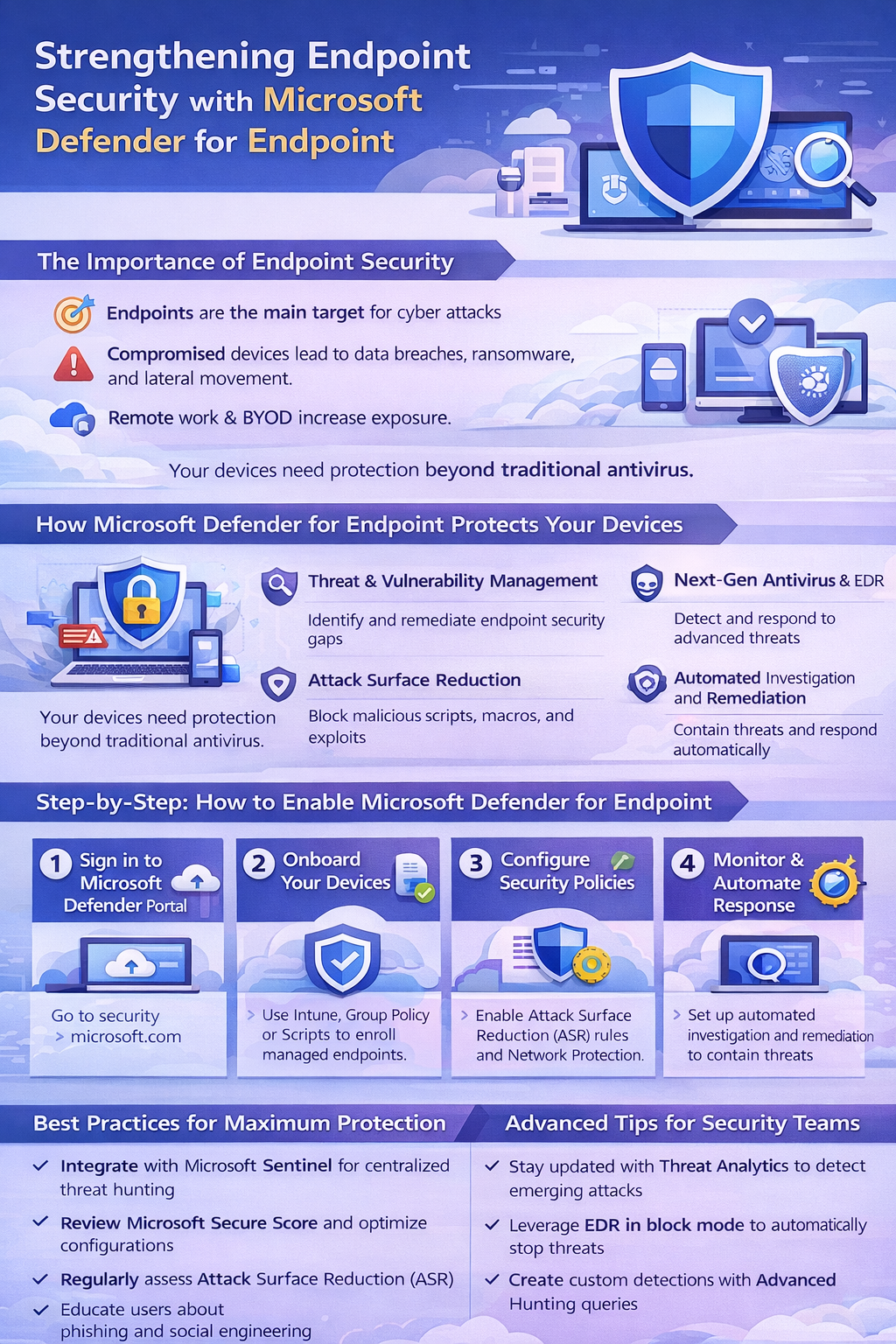
Strengthening Endpoint Security with Microsoft Defender for Endpoint
You will quickly discover that endpoints are the frontline of modern cyber defense — and the first targets for attackers. Laptops, desktops, servers, and mobile devices sit at the intersection of users, data, and the cloud, making them prime entry points for ransomware, credential theft, and lateral movement. This article explains how Microsoft Defender for…
-
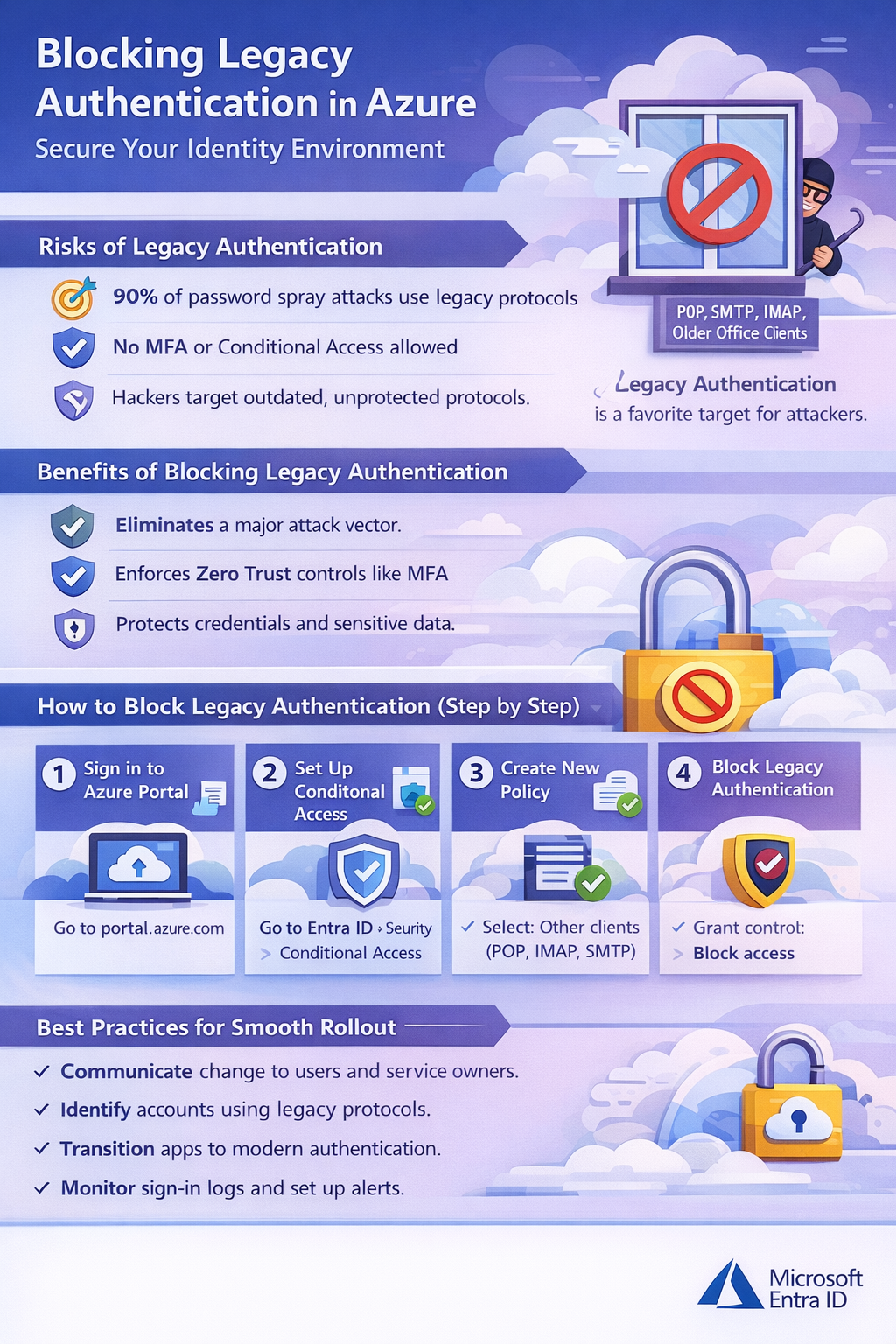
The Hidden Risk of Legacy Authentication
You will often hear about identity breaches, password sprays, and phishing attacks — and yet, the most overlooked attack vector remains legacy authentication. Protocols like POP, IMAP, SMTP, and older Office clients were designed decades ago, long before modern identity threats existed. They cannot enforce Multi-Factor Authentication (MFA) or Conditional Access, making them a persistent…
-

Why Multi-Factor Authentication is Non-Negotiable for Azure Security
You will never out-patch, out-educate, or out-monitor credential theft — but you can neutralize it. Multi-Factor Authentication (MFA) is the single most effective control available to stop account compromise, making it a foundational pillar of Zero Trust and modern cloud security. When MFA is enforced consistently, stolen passwords become largely useless, dramatically reducing the risk…
-

Building Resilience with Azure Site Recovery
Business continuity is no longer optional — it is a core requirement for any organization operating in the cloud. Service outages, cyber incidents, and regional failures are not a question of if, but when. Azure Site Recovery (ASR) provides the foundation for a resilient, enterprise-grade disaster recovery strategy by enabling continuous replication, automated failover, and…
-

Azure Logic Apps: Automating Workflows for Security and Business Efficiency
Learn how to use Azure Logic Apps with Microsoft Sentinel to automate workflows, enhance security, and streamline business processes. Step-by-step guide with best practices from Microsoft Cloud Security Framework. Automation is no longer optional—it’s essential for modern businesses and security operations. By combining Azure Logic Apps with Microsoft Sentinel, organizations can streamline incident response, strengthen…
-

Advanced Threat Intelligence & Hunting with Microsoft Defender and Sentinel
Threat intelligence shouldn’t live in spreadsheets. It should live in your detections. Microsoft Sentinel’s integration with Microsoft Defender Threat Intelligence enables security teams to move beyond reactive alerts and into intelligence-led threat hunting. By correlating high-fidelity Microsoft-curated indicators with real telemetry—endpoint, identity, and network data—you can surface adversary activity earlier and with higher confidence. In…
-

Azure Fundamentals for Beginners: A Guide to Understanding the Basics of Microsoft Azure
Start the new year by mastering the cloud! Jumping into the new year cloud first! Azure Fundamentals for Beginners, walks you through the basics of Microsoft Azure in a friendly, step-by-step style. Perfect for newcomers ready to dive into cloud computing and boost their skills in 2026. Let’s make this your year of Azure! We’ll…